Guest Contributor – Ladd Everitt
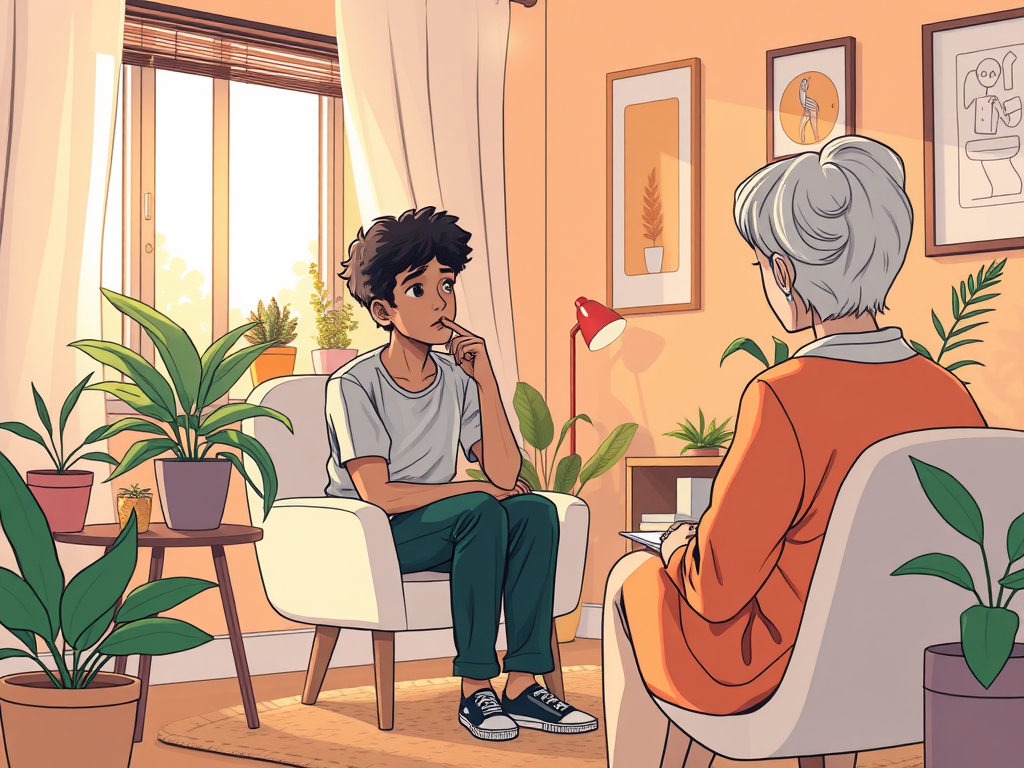
I am now 54 years old. My first experience with a psychologist was at age 9 or 10. My parents were in the process of separating/divorcing and my mom took me to do sessions with a psychologist she was seeing on Long Island. She knew how upset I was about her and my dad splitting up. I remember seeing the psychologist as a positive experience. If nothing else I had someone to talk to about my family breaking apart. I was fortunate. My father was dead-set against therapy (though he desperately needed it for his depression and anger). My mom normalized it for me at an early age.
My own depression, anxiety and anger started when I was 14 or so. My mom bore the brunt of it because we were living alone together (dad moved a significant distance away and I have no siblings). Yet I don’t remember her ever suggesting I resume seeing a psychologist during this period. [Perhaps she did and I rejected it outright?] Whatever the case, I know there was no talk of medicating me for anxiety or depression. Personally, I was in complete denial about the rage and pain I was feeling at that point in my life.
The next time I saw a psychologist was on campus during graduate school, when I was 23-25 years old. I was going through a really difficult break-up that was triggering all my childhood injuries and found a therapist who really helped me through that difficult time.
It might have been her who first suggested I see a psychiatrist (as opposed to a psychologist) to discuss whether medication might be helpful for my depression and anxiety. I was feeling absolutely terrible at the time. I had psychosomatic symptoms so severe I thought I was suffering from mononucleosis and had to leave graduate school to recover at home! Medical providers eventually confirmed it was simply stress I was suffering from, lots of stress.
Whoever pushed me toward that first visit with a psychiatrist, it was a total disaster. I distinctly remember my session with him. He asked me a quick battery of basic questions—couldn’t have lasted more than 15 minutes—then immediately pulled out his pad to write me a prescription for anti-anxiety/depression medication. I remember being so outraged. We hadn’t even started to talk about my life, my personal history, my view of the world. How could he even know I was depressed or anxious, much less in need of medication?!
I walked out of his office angrily—a terrible decision—and suffered needlessly over the next five years or more without medication. This was the period when my depression and anger were most intense. I was in my mid-to-late 20s living alone in a small studio apartment. I had no sustainable love relationships. My job wasn’t fulfilling. What little family I had was far away.
At age 31, I suffered a serious injury (to my leg) that involved a long recovery process, but I finally found a sustainable relationship, meeting the wonderful woman who would become my wife. Sometime during this period (early 30s) I finally began taking prescribed medication for my anxiety and depression, to my great benefit.
I don’t remember why I finally relented and gave up this deep insecurity I had about being someone who took medication for mental health reasons. Maybe it was because my wife was supportive of me. Maybe it was simply that times were changing, and the stigma associated with anti-depressants was ebbing. I’m so glad I finally did and continue to take anti-depressant/anxiety medication (which has been tweaked many times, mind you) to this day.
If I had started taking anti-depression/anxiety medication as a teenager, I would have been so much better off, so much happier, and so much more productive.
When I stop taking my medication (I’ve tried that, unfortunately), my temper spikes and I get irrationally angry at people I love. It’s not pretty. It’s me at my absolute worst, to be honest. So, it’s not hard at all for me to see the good anti-depressants have done for me.
It’s not that I don’t supplement the medication with other things. I have a therapist now, a terrific one who believes in me. I meditate daily for at least one hour, and that has helped me as much or more than all the therapy and medication I’ve had combined. But the medication gives me a baseline, an important foundation I need to feel calm and capable every day.
Ego is such a petty thing. It really holds us back. I know when you’re younger it’s difficult to see that—your identity is so locked up in pride and these battles you think you have to fight to defend it. You want to go it alone and remain standing to prove you’re a man to everybody, including yourself. You see honor in self-suffering.
Here’s a hard truth: Your self-suffering helps no one. Not you, not the people around you, not your family members. No one. And it very well might be harming them just as it harms you.
Do yourself a huge favor. Don’t waste any more time. Instead of closing off and going it alone, reach out to others for help without guilt or shame. Admit you can be broken while having faith you will recover and grow stronger. Treat mental health exactly like you do physical health—something is ailing, and you treat it to get better. That makes all the sense in the world, doesn’t it?
Finally, I’m not going to get political, but we are living in such a stressful world that any objective observer would see depression and anxiety as a perfectly natural response. And that’s not even delving into the ways our parents and/or others wound us as kids and how that trauma lingers…
Don’t be the one that holds you back. If you’re suffering from depression and anxiety, treat it properly. And know you’re not alone. For starters, you have a whole community to turn to right here at Sober Not Subtle if you need support. Be well!

Leave a Reply