Guest Contributor – Ross Hopman
There I was, sitting in a cold weird room, with fluorescent lighting and the exact grey ceiling tiles from my childhood basement- surrounded by what I could only assume were a bunch of drunks and addicts. An elder gentlemen made us recite our names out loud, read an inspiring story from a tiny piece of paper smaller than his hand, and then shared a related story / gave us a topic / and turned the floor over to the room.
I sat and listened. Sometimes inspired, sometimes angry, often filled with shame and confusion – but the feeling above all else? How the hell are these burly old drunks each giving 5-10 minute flawless sermons talking about their deepest darkest fears, insecurities and sadness? Did they all take a public speaking course before they came into alcoholics anonymous? I was baffled. I was intimidated.
Nonetheless, I had heard enough of my story in others to know that I had to come back. It was time. I had hit my bottom and I wasn’t going to go any lower.
Finding My Voice in Early Recovery
So I kept coming back. Sitting there with my hood over my head and my arms crossed to make sure everyone knew I was only kinda listening. But I was listening.
What I wasn’t doing? Sharing. How could I? What the fuck do I know? I have a couple of weeks sober. These guys are spewing out life lessons left and right like coked up Aristotles — I had nothing to offer. But I’d sit there like a sponge, in awe every week, at how blind I was to how I had been going about life for the last 25 years. Learning lesson after lesson. Leaving each week with a ton to think about. Coping mechanisms to practice… Ways to create space before my big emotions took over… Alternate ways to look at life and problems and stress. And a ton of pent up thoughts, I had practiced in my mind, and was too damn scared to say out loud to a room full of strangers.
The Music I Needed to Hear
I had always looked to music throughout my life to help me access emotions I couldn’t always grasp on my own. John Prine’s ‘Sam Stone’, Cinematic Orchestra’s ‘To Build a Home’, Imogen Heap’s ‘Hide & Seek’, The Counting Crows live performance of ‘Round Here’, Johnny Cash’s version of ‘Hurt’, Jason Isbell’s ‘If We Were Vampires’, Death Cab ‘I Will Follow You Into The Dark’ – I would listen to these songs and be able to cry, and let go of some thing that was clawing to get out of me. Like magic. With so many great artists who struggled with addiction, and wrote about it, why couldn’t I find the music I needed to hear at this moment of need? There were songs aplenty that dealt with the pain of active addiction, there were songs aplenty about wanting to be saved, and there were songs about being on the other side of recovery. But I needed something more specific. I was searching for that feeling you get at a speaker meeting when you hear someone else say the exact words you were feeling – that reminder that helps melt away the terminal uniqueness so many of us feel. I needed music that was literal and about early recovery. Not active addiction. Not sobriety. Music that spoke about the period of time when everything you once knew was turned on its head. The first time you realize how connected all of your bad behavior was to filling a void that you ignored. The first time you realize that sometimes you might not have the answers. The first time you realize that asking for help is not weakness. The stripping down of the fake exterior you so carefully curated for the world to see over decades of work. The shame of realizing the amount of damage you might have done to loved ones. Grappling with things like character defects, acceptance, the actual definition of being humble and the scary notion that maybe you’ve been doing it wrong all along and have to change everything.
Turning Pain Into Purpose
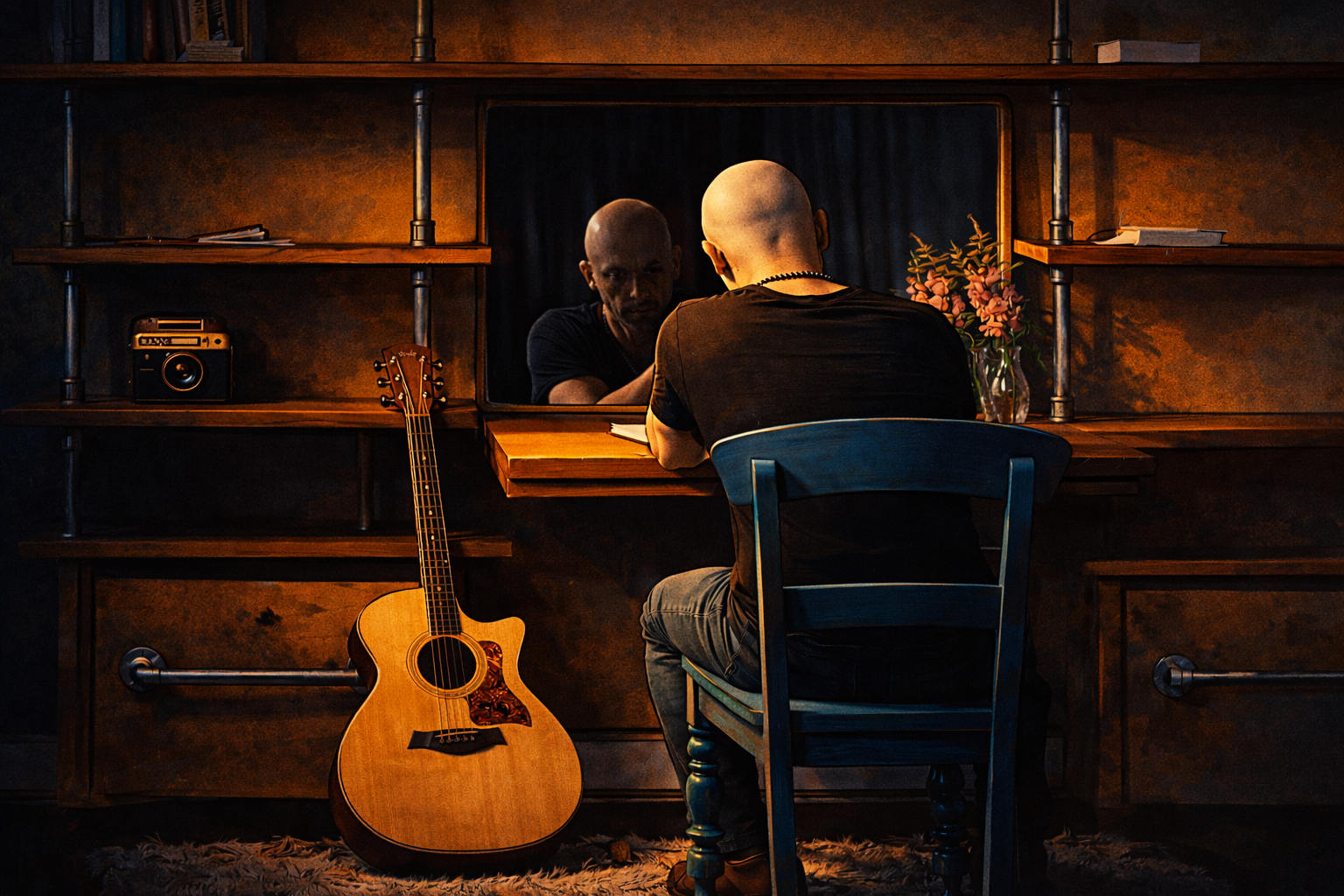
I hadn’t written music for myself in a few years. The guitar looked scary. I didn’t want to sing about being broken. I didn’t want to sing about feeling like I lost at life. But the rooms kept telling me to go against my instincts and run towards the thing that made me feel uncomfortable. So I did. I picked up the guitar. I’d pick it up after every meeting I didn’t speak at. And I’d sing and I’d write. What came out was an album full of songs that poured out of me in just a few weeks. I loved them. They were the most real and authentic things I had ever written.
And no one was ever going to hear them. I’m not crazy. I have a day job. I have kids. I have clients. I have friends and family and the local barista and I don’t want any of those people hearing me cry about my life. I signed up for the ANONYMOUS part. Even if I did share it — I’m surely not important enough to warrant anyone to listen, and definitely don’t deserve that type of position. So I tucked it away. For months.
The more I kept going back, the more I realized that these songs were not likely something I was going to be able to keep to myself. They could help others. Even if just one other.
Then I started to realize that these songs were allowing me to progress in my sobriety in ways I wasn’t able to do on my ownyet. Honesty, service, amends, forgiveness, acceptance, willingness, soul searching …. I was doing miniature versions of the steps, in my own way.
‘When No One’s Watching’ is a journal. It’s a therapy session. It’s a sharing of experience, struggle & hope. Writing it, helped save me. It was the album that I myself needed to hear. I have no idea if anyone is going to listen, but I’m really grateful to be able to share my story and put it out there, just in case someone else really needs to hear these words- the way that I did.
–‘When No One’s Watching’ by Civil Brother now available everywhere you can stream music.

Civil Brother is the moniker for indie folk singer songwriter Ross Hopman (alongside frequent collaborators Koki Saito, Michael Satow, Jordan Lieb, Gio Lobato, Aaron Mirman-Heslin). With songs that center around vulnerable lyrics that often speak to struggle andrediscovery, Civil Brother tries to paint an honest, emotional and often painful recounting of the hardships of recovery / blanketed in a hopeful warmth of rebuilding. Civil Brother’s songs often feature haunting harmonies and candid lyrics that share uncomfortable truths – with the goal of being a soundtrack for anyone seeking a friendly reminder that they aren’t alone in grappling with loss, change, sadness, grief and love.
Follow Civil Brother on socials:
Leave a Reply