Guest Contributor – Sobriety Systems
The invitation arrives with a time, a place, and a familiar expectation: of course you will be there. Before you have decided what you want, you may already be rehearsing an explanation for why you are not drinking, why you cannot stay late, or why this year needs to look different.
You can make those decisions before the holiday begins. You can accept part of an invitation, suggest another way to get together, or decline. A useful plan starts with the day you can actually manage.
Decide what you are saying yes to
An invitation to Thanksgiving dinner does not have to include the drinks beforehand, the late night afterward, and a spare bed in a house where you do not feel comfortable. Consider each part separately. Dinner might work. Staying overnight might not.
Make the arrangement specific: “I would love to come for dinner. I will arrive at three and head home at five.” Or: “I cannot make dinner this year. Would you like to meet for coffee on Saturday?”
These are example scripts to adapt, not lines you have to deliver perfectly. If attending feels wrong for you, “Thank you for inviting me. I am sitting this one out” is a complete answer. You can be warm without offering your private history for discussion.
Choose a sentence before someone offers a drink
Pick words that sound like you: “No thanks, I am not drinking.” “I will have sparkling water.” “I am happy with what I have.” You do not need a dramatic explanation, and you do not need to invent an excuse.
If someone keeps asking, repeating the same sentence is an option. So is changing the subject, moving to another conversation, or leaving. For example: “I have answered that. Tell me how your trip went.” You can decide how much attention you want to give the question.
A trusted person at the gathering may be able to help. Ask for something concrete beforehand: “If people start pushing drinks, could you help me change the subject?” That gives them a useful role without asking them to speak for you.
Make leaving practical
An exit plan needs a way home. Check the transport you intend to use, what it costs, and when it is available. If you are sharing a ride, agree on the departure time before you arrive. Do not rely on someone who may be drinking to drive you.
Choose a backup you can realistically use. If that is not possible, a shorter visit, a different venue, or another day may work better. There is no benefit in planning an exit that depends on a ride you cannot get.
You can also prepare a goodbye: “I am heading out. Thank you for dinner.” A departure does not need to become a debate.
Give the time afterward a little attention
Picture the first hour after you leave. You might be tired, relieved, disappointed, or simply hungry again. Put something easy into that hour: a familiar show, food ready at home, a shower, or a call you have arranged with someone you trust.
If meetings are part of your recovery, check the actual holiday schedule before relying on one. If you would like a check-in, ask ahead: “Would you be available for a short call after dinner?” Save another support option in case that person cannot answer.
Keep the plan small enough to use when you have little energy. “Get home, eat, and call my friend” can be more useful than a long list you feel obliged to complete.
If you are spending the day alone
You do not have to recreate a family holiday for one. Choose a meal you want, one activity you would enjoy, and whatever contact feels helpful. That might mean a morning walk with a friend, a scheduled call, an available meeting, or a quiet afternoon with your phone put away.
Leave room for mixed feelings. Wanting a peaceful day and missing people can happen together. You can change your plan or ask for company without treating the original choice as a mistake.
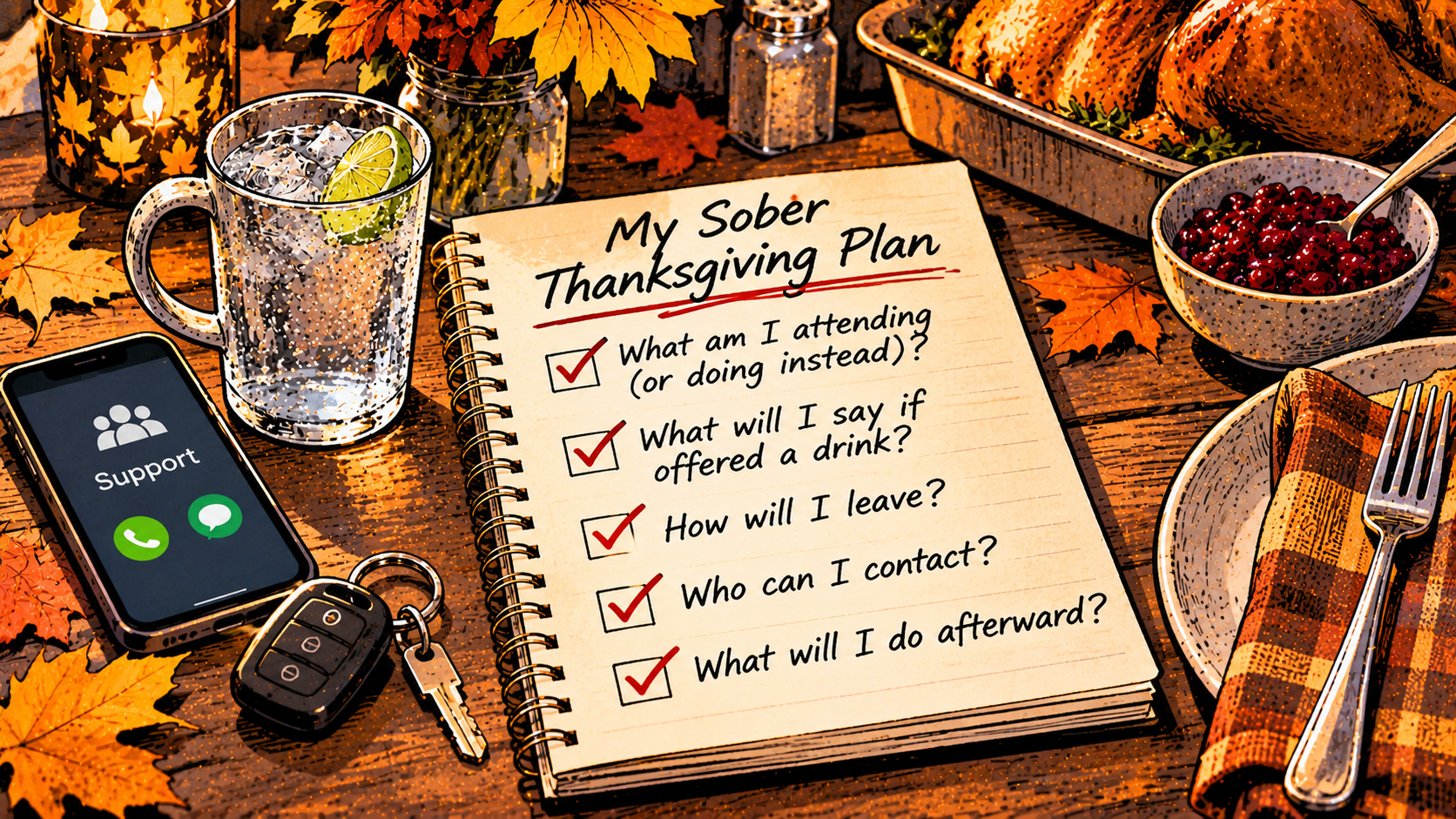
Write down five decisions
Before the day begins, finish these five prompts: What am I attending or doing instead? What will I say if offered a drink? How will I leave? Who can I contact? What will I do afterward?
Keep the answers somewhere you can find them. An invitation tells you what someone else has planned. These five decisions help you make your own plans for the day.
A free resource for your plan
Sobriety Systems has a free Sober Thanksgiving Plan with options for attending, spending the day alone, and hosting or staying overnight, plus a printable planning card. You can use it without buying a membership or providing an email address.
Open the free Sober Thanksgiving Plan:
Sobriety Systems – Free Sober Thanksgiving Plan
Sobriety Systems is an independent educational project offering practical sober-living tools. It also offers an optional paid membership; this article and the linked Thanksgiving plan are free.
Leave a Reply